

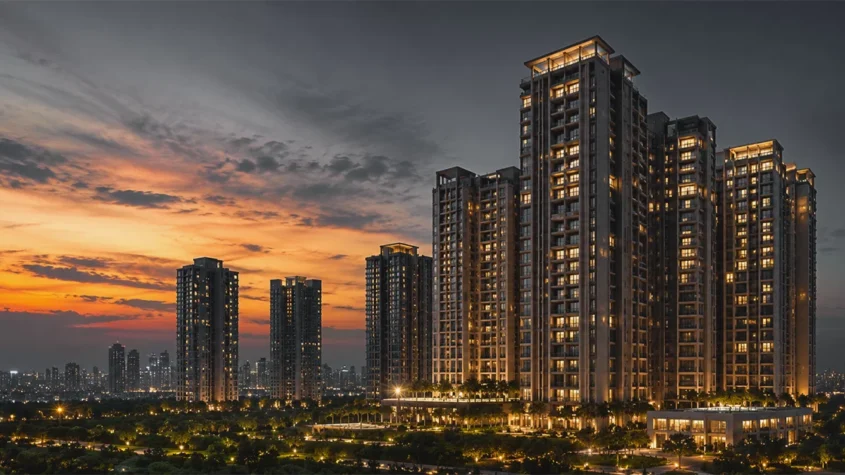
There’s a number floating around in property circles right now that genuinely stops people mid-scroll: more than seven out of every ten homes sold across India’s top cities this year cost over a crore. A year ago, that figure was closer to six in ten. That’s a major shift—the entire market is quietly shifting toward a completely new type of buyer.
If you look for a home today and feel like your budget buys far less, you’re not imagining things. Something real is happening in Indian real estate this year, and it’s worth understanding before you sign anything.
The Budget Home Is Quietly Disappearing
Here’s the part that catches a lot of people off guard — it’s not that premium homes are simply becoming more popular. It’s that the affordable end of the market is genuinely shrinking. Homes priced under roughly a crore have dropped by close to a quarter compared to last year, while the ₹1.5 to ₹3 crore bracket has grown by more than 65% in the same period.
Put those two numbers side by side and the picture gets pretty clear. This isn’t buyers casually trading up because they feel like it. Developers themselves are pulling back on budget housing and pouring their launches into the premium and luxury segments instead, because that’s where the demand — and frankly, the margins — actually are right now. If you’re specifically looking for something affordable, you’re competing for a slice of the market that’s getting smaller every quarter.
So Who’s Actually Buying These ₹1 Crore+ Homes?
A mix of people, honestly, but a few groups stand out. Rising incomes have pushed a lot of upper-middle-class buyers into a price bracket they simply couldn’t have justified a few years ago. Non-resident Indians have been unusually active too, partly because a weaker rupee makes Indian property stretch further when you’re earning and converting from abroad. And there’s a genuine lifestyle shift happening — people want bigger homes, better amenities, proper wellness spaces, and integrated communities, not just four walls and a roof.
The luxury end specifically — homes priced above four crore — has grown by roughly 28% over the past year across the major cities. That’s not a fringe trend anymore. That’s an entire segment of the market maturing at a pace nobody quite predicted a couple of years back.
Which Cities Are Actually Driving This?
Bengaluru has quietly become the standout performer this year, with property prices climbing close to 24% year-on-year — easily the strongest growth among the major metros. But the more interesting story is happening in Delhi-NCR, and specifically in Gurugram, which has posted the steepest price growth of any metro in recent quarters.
Corridors like the Dwarka Expressway and Golf Course Extension Road have appreciated somewhere between 30% and 55% over just the last three years. That’s the kind of number that would normally make you assume speculation is driving things, but most analysts studying the market don’t think that’s what’s happening here. The demand is coming from actual buyers moving in, corporate hiring in IT and finance staying strong, and steady interest from NRIs — not investors flipping properties for a quick return.
Chennai and Kolkata are seeing solid double-digit growth too, and Hyderabad, while growing a little slower on a year-to-year basis, has one of the strongest long-term outlooks of any city in the country. Across the top eight cities combined, average residential prices have crossed ₹10,000 per square foot for the first time ever — a threshold that’s more symbolic than anything, but symbolic in a way that tells you buyer confidence hasn’t wavered even as overall sales volumes have cooled off a bit.
Is This Actually Sustainable, or Is It a Bubble Waiting to Pop
Fair question, and it’s one a lot of buyers are quietly asking themselves before committing to a purchase this large. The reassuring part is that home loan interest rates have actually dropped to their lowest point since 2022, sitting around 7% at the better end after a string of rate cuts. In cities like Delhi-NCR, income growth is now outpacing property price growth for the first time in years, and Mumbai’s loan-repayment-to-income ratio has slipped below 50% for the first time too. None of that sounds like a market running purely on hype.
That said, it’s not all smooth sailing everywhere. Some of the hottest micro-markets are pricing in infrastructure that hasn’t actually been completed yet — metro extensions, airport connectivity, expressway links that are still under construction. If you’re eyeing one of these fast-appreciating corridors specifically because of a project that’s promised but not delivered, it’s worth building in a bit of caution rather than assuming the timeline holds exactly as planned.
What This Means If You’re Actually House-Hunting Right Now?
If your budget is under a crore, look at emerging micro-markets or Tier-2 cities—there’s still plenty of supply and prices remain reasonable. Chasing an already-premiumised segment on a tight budget usually just leads to frustration.
If you’re in a position to buy in the premium bracket, the current lending environment genuinely works in your favour — rates are near a multi-year low, and that alone can meaningfully change what you can afford on a monthly basis compared to just a year or two ago.
And regardless of budget, this is genuinely not the year to skip the basics. Confirm RERA registration before you commit to anything, check the developer’s actual delivery track record rather than just their marketing brochure, and if you’re eyeing a fast-growing corridor, dig into how much of that growth is tied to infrastructure that’s already built versus infrastructure that’s still just a promise on a government roadmap.
Wrapping This Up
India’s property market isn’t behaving the way it used to, and honestly, that’s not entirely a bad thing. It’s more end-user driven, less speculative, and increasingly shaped by people who actually want to live in what they’re buying. The flip side is that the entry point keeps climbing, and if you’re not planning ahead for that, you can end up priced out of neighborhoods that felt accessible not too long ago. Whichever side of the ₹1 crore line you’re shopping on, going in with a clear picture of where the market’s actually headed is going to serve you a lot better than going in blind.
Frequently asked questions
Why are homes above ₹1 crore selling so much more than before?
A combination of rising incomes, strong NRI interest, and developers deliberately shifting their launches toward premium projects has pushed this segment up sharply, while budget housing supply has been shrinking at the same time.
Which Indian city has seen the highest property price growth this year?
Bengaluru currently leads with close to 24% year-on-year growth, though Gurugram and the wider Delhi-NCR region have posted the steepest gains among major metros in recent quarters.
Is Gurugram property still a good place to invest in 2026?
Most analysts see it as a demand-led market rather than a speculative one, backed by genuine end-user buying and steady corporate hiring, though some of the fastest-growing corridors are pricing in infrastructure that isn’t fully built yet, so a bit of caution there is reasonable.
Are home loan interest rates expected to drop further this year?
Rates are already close to a multi-year low, and with the current policy stance, most experts don’t expect another significant round of cuts anytime soon.
Should someone on a tighter budget still consider buying property in 2026?
Yes, but it likely makes more sense to look at emerging micro-markets or Tier-2 cities right now, since prices in the established premium corridors have moved up quickly and the affordable segment has gotten noticeably harder to find in the bigger metros.