

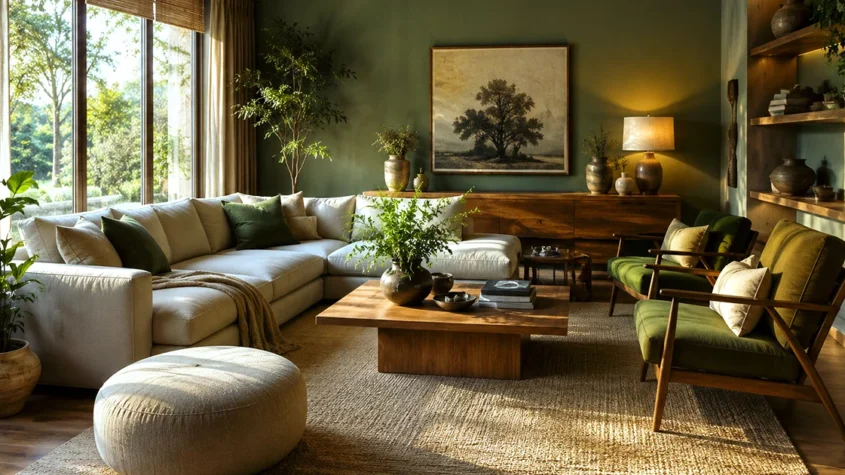
The most effective home improvement tips for 2026 focus on layout, paint, and lighting before furniture or big renovations. High-impact, low-cost changes — repainting cabinets, fixing your room’s flow, layering textiles, and adding warmer lighting — consistently deliver better results than expensive overhauls, and the average homeowner is now planning to spend around $15,000 on renovations this year, down from $20,000 in 2025.
Here’s some good news, especially for you renovators who wish your renovation budget was a bit bigger most of the homeowners are actually getting slightly more conservative too. In 2026, the median amount that the homeowners plan to spend on their renovation is estimated only to be about $15, 000 compared to $20, 000 last year. Moreover, only slightly fewer people are tackling major projects this time too. In the meanwhile, you may think you’re a renovator who has a small budget compared to the others, it is not the case anymore!
What that means practically is this — 2026 is turning into the year of smart, targeted upgrades instead of full gut renovations. You have to trust that small, well-planned changes genuinely do transform how a home looks and feels, often more than people expect. Here’s exactly where to focus your time and money.
Start With Layout, Not Shopping
This is the tip almost nobody follows, and it’s probably the most important one on this list. Before you buy a single new item, just look at where your furniture is currently arranged in your home.
If your furniture is pressed tightly to the wall, the room you’re in might be looking smaller than it really is, not bigger. Getting furniture to face each other so that people can talk easily, rather than just putting furniture next to the walls, is one of the simplest and cost-free way to get people to start feeling that a space is meant for them. It sounds almost too simple to matter, but rooms improve dramatically from this one shift alone, often without a single new purchase.
Once the layout actually works with your space instead of fighting it, everything you add after that — a rug, a lamp, new cushions — has something solid to build on.
Paint Is Still the Best Money You Can Spend
There is one major upgrade that is repeated in every home design trends this year and its paint and there is a reason for it. Paint is easy on the wallet, can easily be changed if you realize that you don’t love it anymore, and it is really fast at changing a room.
The color direction of 2026 is mainly about the warm and deep hues rather than the white-on-white stark look that was prevalent over the last few years. Imagine you are in a room with sage greens, deeply forest colored walls, smoky blues, warm terracottas hues that have a grounded and lived-in feeling rather than being for a season and becoming outdated the next.
If you are feeling adventurous, you can go for the “color capping” which is one such design idea. The method involves painting the ceiling in a tone which is only slightly lighter or darker than the walls and not the plain white. Though it is a simple touch, it does guide your sight upwards and creates an impression of an extremely tailored space without adding to the costs of the paint since it is going to be the same one that you are already buying.
Small Kitchen Changes That Punch Above Their Weight
If you’re looking just to tweak the kitchen instead of totally redoing it, a few small changes can work big magic. You need only paint the cabinets instead of buying new ones, use modern hardware on the drawers instead of the old ones, put up a pretty backsplash, or add some little shelves to have your kitchen look completely new at a price that’s way lower than a full remodeling.
It is really these lesser kitchen improvements which always appear in the list of top money-saving projects that the average homeowner could undertake and which is precisely the reason why they should be prioritized over the expensive ones. If you can only afford one or two such renovations, then hardware and repainting will provide you with the highest visual change at a minimum cost.
Turn Your Bathroom Into a Small Wellness Space
Bathrooms are having a moment this year, and it’s less about function and more about how relaxed the space feels. Walk-in showers, wood vanities, layered lighting, and better ventilation are doing most of the heavy lifting here — but the good news is you don’t have to gut the whole room to borrow some of that feeling.
Sometimes it really is the small stuff that changes everything. A built-in shower niche, a heated towel bar, even just a little bench in the corner — none of these are big projects, but together they turn a bathroom from “just functional” into somewhere you actually enjoy spending time. If a full remodel isn’t happening this year, picking one or two of these is a pretty realistic shortcut to that same calm, spa-like feeling without the spa-like price tag.
Don’t Underestimate Lighting and Textiles
Even a perfectly decorated room can feel bland and unfinished if the lighting and fabric layers are not done right. A single unyielding spot light from the ceiling is typically behind why people perceive a room to look colder or cheaper than it really is.
Layering in a few different light sources — a floor lamp, a table lamp, something warmer than a standard bulb — makes an enormous difference to how a space feels in the evening. On the textile side, a good rug, proper curtains, and a few well-chosen throw pillows instantly make a room feel more finished and considerably more expensive than it actually was.
Don’t Forget the Boring Stuff That Actually Pays Off
Nobody posts a photo of their newly insulated attic on Instagram, and honestly, that’s probably why this stuff keeps getting skipped. But sealing up air leaks, patching visible wear before it turns into a bigger problem, and adding proper insulation where it’s missing — these are the upgrades that quietly give you the best bang for your buck, even if none of it makes for an exciting weekend project.
It’s also worth checking what’s available locally before you commit to a project. Rebates and tax incentives on Energy Star appliances and heat pump systems are widely available in 2026, and combining a comfort upgrade with a rebate you’re already eligible for is about as close to a free upgrade as home improvement gets.
Working With an Older Home
Got an older house? You’re actually in luck this year. Most of these 2026 trends slot right in instead of feeling out of place — curved furniture, natural wood tones, layered textiles, all of it looks just as at home in a decades-old house as it does in something brand new. Honestly, in a lot of cases it works even better, since those softer, warmer touches tend to sit nicely with original architectural details in a way that a stark, ultra-modern look never quite manages to.
Frequently asked questions
Q1: What is the average home renovation budget for 2026?
The median planned renovation spend for 2026 is around $15,000, down from $20,000 in 2025, as more homeowners shift toward smaller, targeted upgrades instead of large-scale renovations.
Q2: What is the cheapest way to make a room look better instantly?
Rearranging furniture to fix the room’s layout is free and often makes the biggest visible difference, followed by a fresh coat of paint, which remains one of the most cost-effective upgrades available.
Q3: What home improvements offer the best return on investment?
Minor kitchen updates like cabinet repainting and hardware swaps, along with energy-efficiency upgrades like insulation and air sealing, consistently offer strong returns relative to their cost.
Q4: What are the top interior color trends for 2026?
Warm, grounded tones are leading in 2026, including sage green, deep forest green, smoky blue, and terracotta, replacing the stark white and cool gray palettes that dominated previous years.
Q5: Can older homes still follow 2026 design trends?
Yes, most 2026 trends like natural wood tones, curved furniture, and layered textiles adapt well to older homes and often complement period architecture rather than clashing with it.