

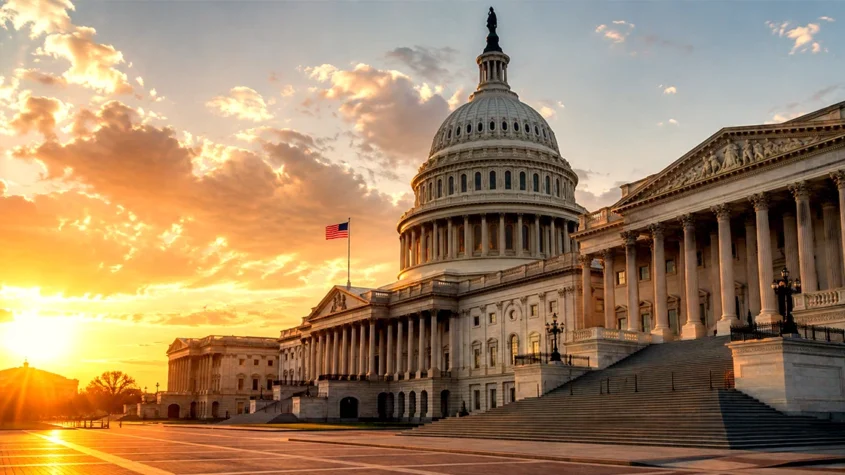
If it seems as if the pace of news coming from political circles is faster than normal recently, that is a bit of a stretch to say, and one would expect such to be a coincidence. In fact, there has been primary season going on heavily in several states, the general election day is just a little over three months off, and even Congress has been working on producing a combination of truly bipartisan laws with the usual bipartisan disputes. There is quite an impressive feat in keeping abreast of all of it, hence, in brief, here is what exactly is going on and why it might be significant for you.
Why the 2026 Midterms Are Such a Big Deal?
Every seat in the House of Representatives plus nearly a third of the Senate will face elections in November 3, 2026. In itself, this event is a major one as a matter of the midterms, but this time it will be even more important in terms of who is president as Congress will decide how much time is left before a change in the administration, if any. Changing the majority from Democrats to Republicans (or vice versa) in either chamber could affect a whole lot of things that would otherwise be on the books or even debated. After all, with new people in power comes new priorities; not everyone agrees on everything and therefore not all of our laws might have been passed if things had been turned around.
It’s also a genuine test of where public sentiment stands roughly a year and a half into a presidency, which is exactly why both parties are treating individual House and Senate races with far more national attention than they’d typically get in an off-year election.
Primary Season Is Already Underway
Because a few states’ primaries fall in the middle of August, that’s one reason the political discussion has noticeably increased in the last few weeks. Vermont’s primary will be on August 11. Alaska and Florida will have theirs on August 18, respectively. Florida’s election in particular has generated much attention this cycle mainly because of a Senate special election, Ron DeSantis, the Governor, appointed a state Attorney General, Ashley Moody to take over the position temporarily while Governor Marco Rubio was gone, and the voters will choose the winner in November.
What’s Actually Moving Through Congress Right Now?
A few specific developments have been dominating Capitol Hill coverage this week, and they’re worth understanding on their own terms.
The Senate passed new sanctions legislation targeting Russia’s energy exports, aimed at cutting into the revenue funding the ongoing war in Ukraine. The bill is notable for two reasons — it reflects a rare moment of bipartisan agreement in an otherwise divided Congress, and it’s been named in honor of the late Senator Lindsey Graham, who championed the legislation before his unexpected death in July. The bill next heads to the House for a vote.
Separately, the confirmation process for Todd Blanche, the administration’s pick for attorney general, has been moving forward after Louisiana Senator Bill Cassidy announced his support, a decision that appears to have secured the votes needed to advance the nomination. A number of outgoing congressional Republicans had reportedly raised concerns during the process, though the nomination ultimately continued to move forward regardless.
On the judicial side, a federal judge granted the Justice Department’s request to drop its case against several leaders of the Oath Keepers, the far-right militia group connected to the events of January 6. The decision has drawn criticism from former prosecutors who argue it downplays the seriousness of what occurred that day, while supporters of the decision frame it differently — a debate that’s likely to continue playing out in both legal and political circles for some time.
The Bigger Storylines Simmering in the Background
Beyond the headlines of any single week, there are a few larger threads worth keeping an eye on heading toward November. Economic messaging has become a genuine battleground, with both parties actively disputing whose read on jobs, prices, and growth voters should trust heading into the fall. Federal Reserve independence has also become an unusually public fight this year, with renewed tension over the administration’s relationship with Fed leadership drawing attention from both financial markets and political commentators.
Government spending and efficiency claims have been another recurring flashpoint, with oversight bodies and administration officials offering notably different accounts of how much has actually been saved through recent federal cost-cutting efforts. These are the kinds of disputes where both sides have genuinely different numbers and genuinely different ways of counting them, and reasonable people are going to keep disagreeing about which framing is more accurate.
None of these threads exist in isolation — they’re all shaping how each party is messaging to voters ahead of primaries and, eventually, the general election in November.
What This Means If You’re Trying to Follow Along?
Honestly, the easiest way to keep track of a cycle this busy is to anchor yourself to the calendar rather than trying to follow every individual news story as it breaks. Primary dates are already public and rolling out state by state through the rest of the year, and knowing when your own state votes is the single most useful thing you can do if you want to actually participate rather than just spectate.
It’s also worth remembering that midterm turnout is historically much lower than presidential-year turnout, which means individual races can swing on relatively small numbers of voters compared to what you’d see in a presidential election. That’s not a reason to feel like your vote matters less — if anything, it’s closer to the opposite.
Frequently Asked Questions
When are the 2026 midterm elections?
The general election is scheduled for November 3, 2026, when all 435 House seats and roughly a third of Senate seats will be decided.
Why is the Florida Senate seat being specially decided this year?
Governor Ron DeSantis appointed Ashley Moody to temporarily fill the seat vacated by Marco Rubio, and under Florida law, that seat must then be decided by voters at the next general election, which falls on November 3, 2026.
What is the Russia sanctions bill that just passed the Senate?
It’s legislation aimed at restricting Russia’s energy export revenue as part of broader efforts to support Ukraine, passed with bipartisan support and named in honor of the late Senator Lindsey Graham, who championed the bill before his death.
Why does control of Congress matter so much in a midterm year?
Whichever party controls the House and Senate determines what legislation can realistically pass for the remaining half of the president’s term, which is why both parties treat midterm races with a level of national attention usually reserved for presidential elections.
Is midterm election turnout usually lower than presidential election turnout?
Yes, midterm turnout has historically run well below presidential-year turnout in the US, which means individual races can be decided by comparatively smaller margins.