


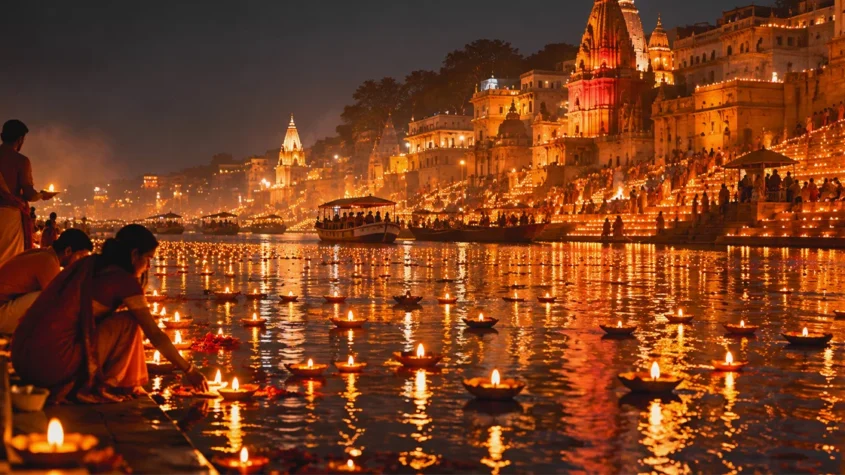
There’s a particular kind of trip that only works if you get the timing right. You can visit Varanasi any week of the year and come away moved by it. But visit during Diwali, when people line the ghats with thousands of diyas and the whole riverfront looks like it’s on fire in the best possible way, and you’ll remember it differently. Same city, same ghats, completely different trip.
That’s the whole case for planning travel around India’s festival calendar instead of just picking dates that work with your leave balance. Below is what’s actually coming up between now and early 2027, and where I’d point you for each one.
Holi is earlier than you’d think in 2026
We usually expect Holi around mid-March, but it arrives surprisingly early in 2026. Holika Dahan takes place on March 3, with Rangwali Holi following on March 4. A total lunar eclipse falls on the exact same tithi this year, leading several traditional regions to adjust their bonfire timings. If you’re traveling to a major cultural hub, it’s a good idea to check with locals on the ground—printed calendars won’t always catch those regional shifts.
For the full experience, Mathura and Vrindavan are still the gold standard — this is where Holi is supposed to have originated, tied to Krishna’s childhood, and the celebrations there run for days rather than one afternoon. Jaipur and Udaipur are the easier version: still genuinely festive, but with better hotel infrastructure if you’re not up for sleeping on a floor mat in a homestay. Goa’s Holi has its own flavor entirely — less ritual, more beach party.
One practical note: homestays in Mathura-Vrindavan tend to book out six to eight weeks ahead for Holi specifically. If this is the trip, don’t wait until February to sort accommodation.
The gap before the big autumn stretch
Between Holi and October, there isn’t a festival that really justifies building a trip around — Eid-ul-Fitr falls around March 21, and it’s meaningful, but it’s not really a “travel” festival in the way Holi or Diwali are. Baisakhi in mid-April is worth knowing about if you’re already planning to be in Punjab; the Golden Temple during Baisakhi is genuinely something else, dhol drums and all, but it’s not typically a reason to book flights on its own.
This stretch is actually a decent window for the kind of India trip that doesn’t revolve around festivals at all — hill stations, Ladakh (once the passes open), the backwaters in Kerala before the real heat sets in.
Then autumn hits, and everything happens at once
From mid-September through mid-November, India’s festival calendar goes from quiet to relentless. Janmashtami kicks things off in early September, then Navratri begins around October 12, building into Dussehra on October 20 — the day the giant Ravana effigies get burned in public squares across the north, which sounds like it might be a niche regional thing until you see the crowd size in person.
If Dussehra is on your list, Kolkata deserves a special mention. Durga Puja there often overlaps with the same window, and the pandals — temporary, elaborately themed structures built specifically to house the Durga idols for the festival — are honestly closer to public art installations than religious decorations. Some neighborhoods commission a different theme every year and treat it like a competition, which, from a visitor’s standpoint, it kind of is.
Then Diwali lands on November 8. This is the one most people already have on their radar, and for good reason — homes and streets covered in diyas, rangoli patterns worked into pavements and courtyards, fireworks going well past what you’d expect. Varanasi and Jaipur are the two cities that consistently get named as the best places to actually witness it rather than just experience it from inside a family living room. Varanasi’s Ganga Aarti, already a nightly ritual, becomes something considerably bigger during Diwali week. Udaipur’s lakes doing the reflection thing with all those lights is its own separate reason to go.
Worth flagging: Diwali is fundamentally a family festival, and a lot of businesses close for several days around it. If you’re planning to travel during the week itself rather than just watch it happen, book transport and accommodation well ahead — this isn’t a festival where you can wing it and expect same-day train tickets.
A calendar quirk worth knowing about for 2026
This year has an Adhik Maas — an extra lunar month inserted into the Hindu calendar between mid-May and mid-June — which is part of why some festivals land later than you might expect if you’re going off a previous year’s dates. Raksha Bandhan and Diwali both shifted later in 2026 because of it. It’s not something that affects your trip planning directly, but it explains why the dates might look “off” compared to what you remember from 2024 or 2025.
Quick reference
- Holi (Holika Dahan / Rangwali Holi): March 3–4, 2026 — Mathura, Vrindavan, Jaipur, Udaipur, Goa
- Eid-ul-Fitr: around March 21, 2026 (moon-sighting dependent, so treat as approximate)
- Baisakhi: mid-April — Amritsar
- Janmashtami: early September, 2026
- Sharad Navratri begins: October 12, 2026
- Dussehra: October 20, 2026 — Kolkata (Durga Puja overlap), north Indian cities generally
- Diwali: November 8, 2026 — Varanasi, Jaipur, Udaipur
- Holi 2027: March 3, 2027 — plan Mathura-Vrindavan trips 3–6 months out
Frequently Asked Questions
Do I need to book festival accommodation months in advance, or is that overkill?
For Holi in Mathura-Vrindavan and Diwali in Varanasi, yes — six to eight weeks minimum, and earlier if you want anything mid-range or nicer. For most other festivals, three to four weeks is usually fine unless you’re set on a specific heritage property.
Are festival dates ever wrong on travel sites?
More often than you’d think, especially for anything tied to the lunar calendar — Hindu festival dates shift year to year based on the Panchang, not a fixed solar date, so a site that hasn’t updated since last year can quietly have it wrong. When in doubt, cross-check against a couple of sources close to your travel date rather than trusting whatever comes up first in search.
Is it disrespectful for a tourist to just show up during Diwali or Durga Puja?
Not at all, generally — these are public celebrations and visitors are welcome, especially at things like Durga Puja pandal-hopping, which is basically designed for foot traffic. Diwali is a bit more of a private, family-centered day itself, so the earlier days of the festival period (when there’s more public activity, markets, lighting) tend to make for a better visitor experience than trying to insert yourself into someone’s actual Diwali night at home.