


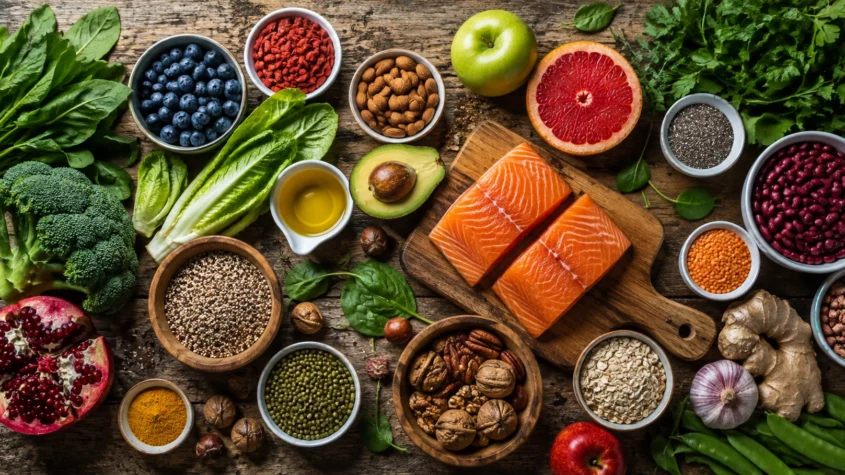
Every January, the internet fills up with the same promise — some brand-new 30-day detox, a miracle ingredient, a diet that swears it’ll fix everything if you just cut out an entire food group. And every year, most of it quietly disappears by February. What actually works, according to the people who study this for a living, is a lot less exciting and a lot more useful: eat real food, most of the time, consistently. That’s it. No detox, no 21-day reset, just a handful of foods that you genuinely should serve on your table.
So let’s ignore the noise and go to those foods they really have it.
Leafy Greens Aren’t Boring, They’re Just Underrated
Spinach, kale, Swiss chard — these get written off as the “diet food” everyone pretends to enjoy, but the actual nutrition packed into a handful of greens is honestly kind of ridiculous. Vitamins A, C, and K, plus iron and calcium, all in something you can toss into almost anything without really tasting it.
That’s actually the easiest way to make greens a habit — don’t build a whole meal around them, just sneak them in. A handful of spinach melts completely into a smoothie. Adding kale to the soup right at the end of cooking barely changes the flavor. Switching a tortilla for a wide Swiss chard leaf is something you will surprisingly like. Small additions do not make a lifestyle overhaul.
Berries Are Having a Real Moment, and It’s Deserved
Blueberries specifically have become the food nutritionists keep bringing up for brain health, and interestingly, they’re now beating out trendier names like matcha and turmeric in terms of what people actually associate with cognitive support. The reason comes down to antioxidant compounds called anthocyanins, which research keeps linking to better memory and reduced oxidative stress as we age.
Strawberries and raspberries deserve credit too — same general benefits, plus a genuinely good trick for anyone trying to eat less sugar. A bowl of mixed berries satisfies a sweet craving in a way that actually leaves you feeling good afterward, instead of the crash that follows a processed dessert.
Fatty Fish: The One a Lot of People Skip
Let’s be honest: salmon, sardines, and mackerel don’t always make the weekly grocery cut. But there’s a good reason health experts keep bringing them up. The omega-3s in oily fish give your heart and brain a boost that’s super hard to get anywhere else—not to mention, they’re also stacked with quality protein and vitamin D.
When you don’t feel like cooking a fresh salmon fillet on a weeknight. You can get the exact same benefits in under five minutes by throwing canned sardines on whole-grain toast or into a quick salad.
Fermented Foods Are Quietly Everywhere Now, and That’s a Good Thing
Yogurt, kefir, kimchi, sauerkraut, miso — fermented foods have gone from a niche health-store aisle to genuinely mainstream, and the gut health research behind them keeps stacking up. A meaningful chunk of people now specifically look for “gut-friendly” labels when grocery shopping, and it’s not just a trend for the sake of it.
This section is the one that usually takes people off guard; the reason behind being able to tell when you’re hungry or not, even when someone else gives you a slice of cake, has a lot to do with our stomachs.
Approximately 90% of the body’s serotonin, a neurotransmitter that is very closely connected to mood, is actually manufactured in the gut, not the brain. When the phrase gut health affects more than digestion pops up in the context, one might assume it’s some wellness marketing hyperbole, but it’s not the case at all. That is a real, physiological connection that scientists have not even completely mapped out yet.
Nuts and Seeds: Small, but They Genuinely Add Up
Walnuts, almonds, chia seeds, flaxseeds, pumpkin seeds — nutritionists keep recommending these daily, and it’s easy to see why once you look at what’s packed into a small handful. Healthy fats, real protein, and micronutrients like magnesium and omega-3s, all wrapped into something you can eat straight from a bag without any prep.
They’re genuinely one of the easiest additions on this entire list. A spoonful of chia seeds stirred into yogurt, a handful of almonds as a snack, flaxseed sprinkled over oatmeal — none of it requires planning a meal around it.
Legumes Deserve More Credit Than They Get
Lentils, beans, and chickpeas a family of legumes that somehow fall out of the spotlight, primarily because they are cheap and not fancy. Nevertheless, legumes are nutritional powerhouses. With ample fiber, really filling and a nice source of plant protein; they play a major role in many of the Mediterranean and plant-based diet studies that come out first when it comes to results in terms of human long-term health benefits.
Using a can of beans for a hearty pot of chili or a pot of soup is among the simplest forms of healthy eating, while also being totally nutritious. Moreover, if you simply roast chickpeas that are seasoned with a bit of olive oil and spices, you will have yourself a very satisfying healthy snack that doesn’t feel like you’re giving up your favorite snacks at all.
The Bigger Pattern Behind All of This
If there’s a common thread running through every food on this list, it’s this — none of it is exotic, none of it requires a specialty store, and none of it is about restriction. Recent dietary guidance has moved pretty firmly in this direction too, emphasizing whole, minimally processed foods and balance over cutting entire food groups out. When nutrition experts were recently surveyed on their single best piece of advice, the top answer, by a wide margin, was simply “focus on whole, unprocessed foods” — not a specific diet, not a supplement, just real food, most of the time.
Even the healthy food market has experienced a similar change as healthy foods have rapidly become a multi-billion-dollar industry worldwide, a trend that people have taken up seriously and have become increasingly conscious about their food choices that are good for a healthy and sustainable lifestyle, rather than just being the next temporary fashion.
How to Actually Make This Stick?
There is no doubt that nobody eats perfectly every day, and honestly, that’s not what we’re aiming for anyway. If you aim for only 70 percent of the food you eat to consist of a variety of colorful vegetables, quality protein sources, whole grains, and healthy dietary fats, while being reasonably hydrated throughout the day, the basics will already be well covered. The rest is just consistency; doing the same few things regularly till you forget that they are not part of what your normal life used to be.
If you’ve constantly noticed that you’re low on energy, have digestion issues, or have been having trouble with your sleep while you still think that your diet is okay, then that’s the kind of information that your doctor or a nutritionist should be aware of before you start experimenting with supplements on your own. For a great majority of people, the basics are quite straightforward: consume whole, preferably unprocessed food and don’t use artificial ingredients or supplements as a substitute for real food and natural, healthy ingredients in your diet on a daily basis, and give everything a chance to work out on its own through time.
Frequently Asked Questions
What are the best foods to eat every day for a healthy lifestyle?
A mix of colorful vegetables, a quality protein source like fish, eggs, or legumes, whole grains, healthy fats from olive oil or nuts, and adequate hydration covers most of what the body genuinely needs on a daily basis.
Which foods are best for gut health?
Fermented foods like yogurt, kefir, kimchi, sauerkraut, and miso are consistently recommended for gut health, since they introduce beneficial bacteria that support a more diverse and balanced gut microbiome.
Why are blueberries considered good for brain health?
Blueberries are rich in anthocyanins, antioxidant compounds linked in research to improved memory and reduced oxidative stress, which is part of why they’re increasingly associated with cognitive health.
Do I need to completely change my diet to eat healthier?
No, most nutrition experts recommend gradually adding nutrient-dense foods to meals you already eat, rather than overhauling your entire diet, since smaller sustainable changes tend to stick better long-term.
Is the Mediterranean diet still considered one of the healthiest eating patterns?
Yes, Mediterranean and flexitarian eating patterns continue to have some of the strongest research backing for long-term health outcomes, largely due to their emphasis on whole plant foods, healthy fats, and minimal processed ingredients.