

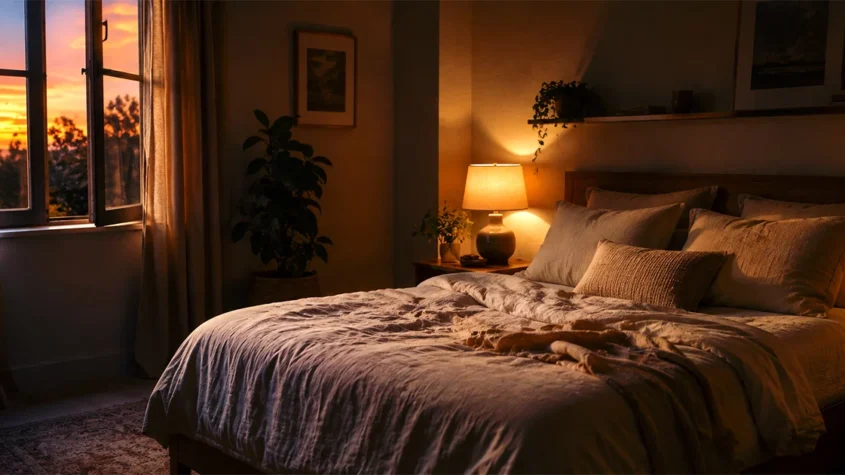
Sleep optimization means aligning your sleep timing, environment, and daily habits with your body’s natural circadian rhythm rather than just chasing eight hours. The most effective changes for 2026 are consistent sleep-wake timing, a bedroom temperature between 65–68°F, reduced evening light exposure, and treating “sleep debt” as something that builds up and needs deliberate recovery, not something you can fix with one long weekend nap.
You’ve probably done the obvious stuff already. Phone away an hour before bed, room dark, maybe even one of those white noise machines everyone swears by. And yet you’re still waking up at 3 a.m. staring at the ceiling, or dragging yourself through the afternoon on caffeine number three. If that’s you, it’s not that sleep advice doesn’t work — it’s that most of it stops at “get 8 hours” and never explains what’s actually happening underneath.
This year, sleep science is finally catching up to what a lot of people already suspected — sleep isn’t one uniform thing you either get enough of or don’t. It’s layered. It has timing, depth, and a debt system that quietly tracks everything you owe your body. Once you understand that part, half the frustrating advice out there starts making a lot more sense.
Why “Just Get 8 Hours” Is Bad Advice?
Here’s what nobody tells you about the eight-hour rule — it’s an average, not a target that applies equally to everyone. Your actual sleep need is individual, and research on sleep extension has shown that most people carry around a level of “potential sleep debt” they don’t even recognize, because they’ve simply adjusted to feeling slightly tired as their new normal.
Sleep runs on two systems working together. One is your circadian rhythm — your internal 24-hour clock, controlled by a tiny cluster of cells in your brain that responds to light and darkness. The other is your homeostatic sleep drive, which is basically pressure that builds the longer you’re awake and gets released once you sleep. When these two are in sync, you fall asleep easily and wake up without needing three alarms. When they’re fighting each other — say, you’re exhausted at 9 p.m. but forcing yourself to stay up till midnight out of habit — that’s when sleep starts feeling broken even though nothing is technically wrong with you.
This is also why sleep debt doesn’t just disappear after one good night. Your body can partially compensate with deeper sleep stages after a rough stretch, but that recovery is not unlimited — repeatedly cutting sleep short and expecting a single 10-hour night to erase it just doesn’t hold up the way people assume it does.
The Habits That Actually Move the Needle
Not everything marketed as a “sleep hack” is worth your time. A few things, though, keep showing up across the research for a reason.
Keep your room cooler than you think. Somewhere between 65 and 68°F tends to work best for most people, because your core body temperature needs to drop by a couple of degrees to actually initiate sleep. A room that’s too warm fights that process the entire night, which is part of why you toss and turn without ever knowing why.
Get real daylight early, and dim things down late. Light is the single strongest signal your circadian clock responds to. Bright light in the evening — including the blue-heavy light from screens — pushes back your body’s melatonin release and delays when you actually feel sleepy. Morning sunlight flips that around. It anchors your clock, so the body has a rough sense of when nightfall ought to begin.
Treat your sleep and wake time as fixed, even on weekends. This one’s less exciting than a fancy gadget, but it’s arguably the most important. Constantly shifting your schedule by two or three hours on weekends is basically mini jet lag, and your circadian rhythm has to re-adjust every single Monday because of it.
Don’t ignore your mattress and bedding. This sounds almost too simple, but discomfort is one of the most common — and most overlooked — reasons people wake up repeatedly through the night without realizing that’s what’s happening. Interestingly, this is also showing up in spending data: bedding searches for things like linen sheets are up well over 100% this year, and people are genuinely investing more in what they sleep on and under.
Give sound and light pollution a real fix, not a half fix. Blackout curtains or a proper sleep mask, combined with earplugs or steady white noise, deal with two of the most common causes of fragmented sleep — the kind where you’re technically asleep for eight hours but waking up briefly dozens of times without remembering it.
What’s Actually New in 2026?
A few things have shifted the sleep conversation this year specifically. Wearables have moved past just counting hours — they’re increasingly used to track sleep debt and circadian alignment directly, giving people a number to work with instead of a vague feeling of being tired. AI-assisted sleep tools are also being used more seriously in early detection of issues like sleep apnea and insomnia patterns, which used to require a formal sleep study to even flag.
There’s also a quieter, more personal shift happening — more people are prioritizing the bedroom itself as a wellness investment rather than an afterthought. Bigger beds, better fabrics, more attention to temperature control. Even pet co-sleeping has become a real factor in how people are furnishing bedrooms, with a majority of pet owners now sharing a bed with their animals and shopping accordingly.
None of this replaces the basics. But it does show sleep is finally being treated as something worth measuring and protecting, not just something that happens by default.
A Simple Way to Start Tonight
If what you’ve read in this article seems overwhelming to you, there’s no need to do everything at once. Pick one lever first — timing, temperature, or light — and give it a real week before judging whether it worked. Most people notice the biggest difference from fixing their light exposure and keeping a consistent wake time, simply because those two directly control your circadian signal, which everything else is built around.
Frequently Asked Questions
Q1: What is sleep optimization?
Sleep optimization is the practice of aligning your sleep timing, bedroom environment, and daily light exposure with your body’s natural circadian rhythm, rather than simply aiming for a fixed number of hours.
Q2: What is the ideal room temperature for sleep?
Most research points to somewhere between 65°F and 68°F as the ideal range, since your core body temperature needs to drop slightly to initiate and maintain deep sleep.
Q3: Can you fully recover from sleep debt in one night?
Not really. Your body can partially compensate with deeper sleep after a poor stretch, but that recovery is limited and can’t fully reverse extended periods of sleep restriction in a single night.
Q4: Does screen time really affect sleep quality?
Yes. Evening light exposure, especially blue-heavy light from screens, suppresses melatonin production and delays the circadian signals that tell your body it’s time to sleep.
Q5: What’s the single most effective habit for better sleep?
Keeping a consistent sleep and wake time, even on weekends, tends to have the biggest overall impact because it keeps your circadian rhythm from constantly having to reset.