


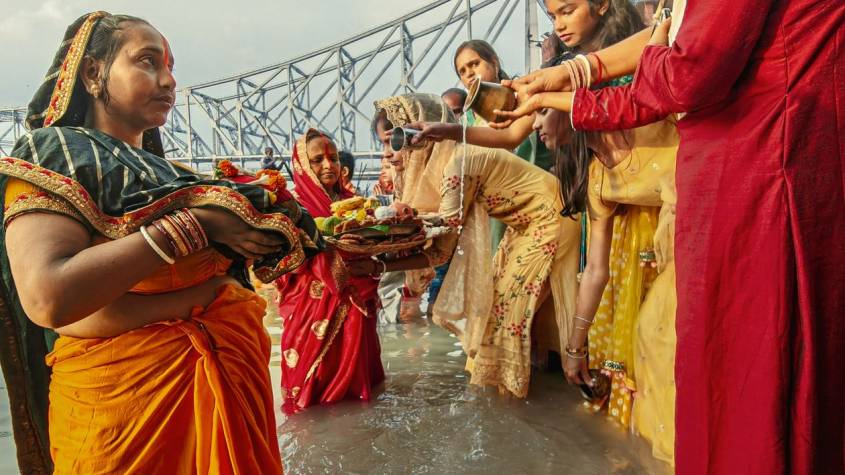
Chhath Puja 2026 begins on Friday, 13 November and ends at sunrise on Monday, 16 November. The main evening offering to the setting sun (Sandhya Arghya) falls on Sunday, 15 November. If you are planning a trip home to Bihar, eastern Uttar Pradesh or Jharkhand, or you are getting ready at a ghat in Delhi or Mumbai, this guide has the four dates, the arghya times for major cities and the practical details that usually get missed.
The dates below come from Drik Panchang’s 2026 Chhath calendar, and they match the festival listing on the government’s Incredible India portal (13 to 16 November 2026).
Chhath Puja 2026 date: the four-day calendar
| Date | Day | Ritual | What happens |
|---|---|---|---|
| Fri, 13 Nov | Day 1 | Nahay Khay | A holy bath, a cleaned home and a single sattvik meal |
| Sat, 14 Nov | Day 2 | Kharna (Lohanda) | A day-long fast, broken after sunset with kheer and roti prasad |
| Sun, 15 Nov | Day 3 | Sandhya Arghya | Arghya to the setting sun at the ghat |
| Mon, 16 Nov | Day 4 | Usha Arghya and parana | Arghya to the rising sun, then the fast is broken |
Diwali falls on 8 November this year, so Chhath starts five days after it, which is the usual gap. If you are also planning other trips around the season, our India festival calendar for 2026-27 lists the dates that follow.
Chhath Puja 2026 arghya timings by city
The arghya is tied to the actual sunset and sunrise, so the time changes from city to city. The times below are for 15 and 16 November in IST. The FreePanchang and Sanatan Bodh calendars both give these figures, and they agree with Drik Panchang for New Delhi.
| City | Sandhya Arghya (sunset, 15 Nov) | Usha Arghya (sunrise, 16 Nov) |
|---|---|---|
| Patna | 5:01 PM | 6:07 AM |
| New Delhi | 5:28 PM | 6:44 AM |
For any other city, check a local panchang the day before. Plan to reach the ghat at least an hour early. On the third evening, crowds at big ghats such as those in Patna build up well before sunset, and the sun can take a few minutes to clear buildings or trees on the horizon.
What happens on each day of Chhath
Day 1 – Nahay Khay (13 November)
The vrati, the person keeping the fast, bathes in a river or pond, or at home with Ganga jal, and the house is cleaned thoroughly. They eat one pure vegetarian meal. Traditionally this is lauki (bottle gourd), chana dal and rice cooked without onion or garlic. Many families use rock salt.
Day 2 – Kharna or Lohanda (14 November)
The vrati fasts from sunrise to sunset. In the evening, after a puja, they eat prasad of jaggery kheer and roti, which is then shared with the family. As the Incredible India page notes, this is also when the toughest part begins: a fast without water that is commonly described as lasting about 36 hours.
Day 3 – Sandhya Arghya (15 November)
Families carry the soop (winnowing basket) and daura (bamboo basket) to the ghat. They are filled with thekua, fruit, sugarcane and other offerings. Standing in the water, the vrati offers arghya to the setting sun. Drik Panchang points out that this is the only time of the year when arghya is offered to the setting sun. That evening, many homes also mark Kosi: sugarcane stalks are tied into a canopy and lit with lamps.
Day 4 – Usha Arghya and parana (16 November)
Before dawn, everyone goes back to the ghat to offer arghya to the rising sun. After that the vrati breaks the fast (parana), usually with prasad first, and the thekua and fruit are shared with neighbours and relatives.
Chhath Puja samagri checklist
Family traditions differ, so check with an elder. Most households need these:
- Bamboo soop and daura, plus brass or copper vessels for the arghya
- Thekua (wheat flour, jaggery, ghee) and rice laddoo
- Seasonal fruit: banana, sugarcane, coconut, sweet lime, water chestnut (singhara), sweet potato
- Diyas, ghee, cotton wicks, sindoor and new clothes for the vrati
- Raw milk and Ganga jal for the arghya
Practical tips for the 2026 vrat
Look after the person who is fasting
A nirjala fast that runs through Kharna, the third day and the night that follows is very hard on the body, especially for older people and for anyone with diabetes, kidney disease or high blood pressure, or who is pregnant. If that describes your vrati, speak to a doctor before the festival. Many families let these members keep a modified fast. On Nahay Khay and Kharna, simple home food with enough fluid helps. Our guide to fasting safely during Navratri covers the same warning signs, such as dizziness, palpitations and confusion, and they apply here too.
Mid-November weather
Mornings in north India are cool by mid-November, and the dawn arghya means standing in cold water. Carry a dry change of clothes, a shawl and a flask of warm water for after the parana. In Delhi, Chhath often coincides with poor air quality. If the AQI is high, wear masks for the trip to and from the ghat, especially for children and older people.
Travelling home for Chhath
Trains to Bihar and eastern UP from Delhi, Mumbai, Surat and Kolkata are among the hardest of the year to book. Railways usually announce festival special trains in the weeks before. Check IRCTC regularly and avoid booking through unverified agents. If you are combining the trip with other holidays, our winter travel guide for India explains booking windows.
Prasad that keeps
Thekua stays good for days because it contains very little moisture, which is why it travels so well to relatives in other cities. Fried in ghee and stored airtight, it usually keeps for about a week. Fresh fruit should be eaten within a day or two. For a lighter plate after the parana, these everyday healthy foods are worth looking at.
Why Chhath matters
Chhath is dedicated to Surya and Chhathi Maiya. It stands out among Hindu festivals because there is no idol and usually no priest leading the main rituals. The family, the river and the sun are at the centre of it. As the festival has followed migrants from Bihar and Purvanchal across India and abroad, cities such as Delhi and Mumbai now set aside ghats and artificial ponds for it each year.
Frequently asked questions
When is Chhath Puja in 2026?
From 13 to 16 November 2026. Nahay Khay is on 13 November, Kharna on 14 November, Sandhya Arghya on 15 November and Usha Arghya on 16 November.
What is the Sandhya Arghya time on 15 November 2026?
It is at sunset: about 5:01 PM in Patna and 5:28 PM in New Delhi (IST). Check a local panchang for other cities.
When is Kharna 2026?
Saturday, 14 November 2026. The prasad is eaten after sunset, and the nirjala fast begins after that.
Is 16 November a holiday?
Chhath holidays are set by each state. Bihar and Jharkhand usually declare them, and the dates appear in each state’s official holiday list. Check your state government or employer’s notification instead of relying on social media posts.
Can Chhath be done at home?
Yes. Many families in apartments now offer arghya in a small tub or a terrace pool when they cannot get to a ghat. What matters in the ritual is facing the sun at sunset and sunrise.