

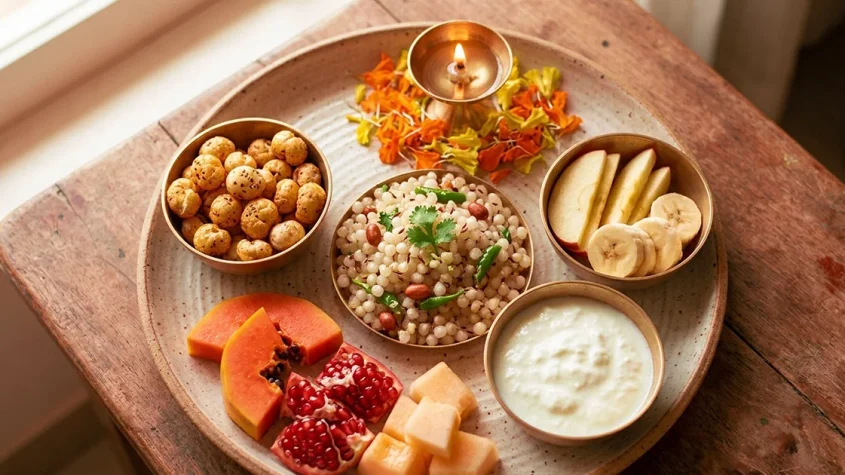
Sharad Navratri started on Sunday, October 11, and will conclude on Vijayadashami (Dussehra) that is, Tuesday, October 20. For those who are fasting, today is still only the second day of the fast, which suggests that this could have been an appropriate moment to ask a question that is usually left out of festivals: if you want to keep up a vow involving food restrictions (vrat) for as long as nine days, how can you do it without becoming completely exhausted, bloated and dizzy by the fifth day? You might get an answer if we try and get you to go through your vrat without a hitch for days in the form not so much of words but pictures, with the doctor warning coming at the end in very clear terms: “If you are on medicines, consult your doctor first before changing your dietary routine.”
First, the dates (and why they differ between calendars)
Navratri started on Sunday, October 11 and will end with Vijayadashami (Dussehra) on Tuesday, October 20. Today is only day two if you’re fasting, making this the perfect moment to raise a point that is usually ignored by festival articles: what are the secret techniques of doing an austerely lifestyle for as many as nine days without becoming very exhausted, bloated, or even dizzy by day five? Following is a down-to-earth, step-by-step advice and the one health condition which is an absolute contraindication to fasting.
What a Navratri fast actually looks like?
There are no particular guidelines or methods to follow when it comes this. Different people have different kinds of vrat food. One set of people can fast for vrat for all the days, while the others fast only on the first and last days or only on Ashtami. For some it is only one meal a day others just eat fruit and milk, and few people refrain from eating grains but have otherwise normal meals. What is important is following your chosen way of keeping vrat that you are safe and healthy enough to do it.
The usual vrat foods, and how they behave in your body
Here’s a quick, honest rundown of the staples:
Kuttu (buckwheat) and singhara (water chestnut) flour. Contrary to its name, buckwheat has no relation to wheat. It is a seed, and it does not contain gluten. Buckwheat flour has a dense, filling texture without compromising on flavor, it makes for great recipes, but they are also the main reason for an enduring problem: at every festive season, the local health departments of various states report a number of instances of food poisoning linked to stale or adulterated kuttu flour. It is, however, the right choice to buy the flour from a verified shop along with checking the expiration date on the product packaging and the smell of the flour to be safe, or one can avoid using the flour which is not sealed properly or smells off.
Sabudana (sago). It’s easy and comforting, but it’s almost all starch. It gives quick energy and little else. If sabudana khichdi is your main meal, add peanuts, vegetables, or curd on the side, so you’re not relying on starch alone.
Potatoes and sweet potatoes. Good for energy and easy to digest. Boiled or roasted is lighter than deep-fried.
Makhana (fox nuts), nuts, and seeds. Light, filling snacks that add some protein and fibre compared with a packet of chips.
Fruits, milk, curd, buttermilk, paneer. These are your best protein and hydration sources during a vrat. Curd and buttermilk also help if the food feels heavy.
Rock salt (sendha namak). It’s the traditional salt for fasting, but it’s still salt. It doesn’t make a dish low in sodium, so people watching their blood pressure should still go easy.
The trap: a vrat diet can be heavier than a normal diet
This is the single most effective tip in the whole article.
A large number of vrat snacks that are widely consumed such as kuttu puris, aloo tikki, sabudana vada, and basically any other type of “fasting” chips in a packet are fried in oil and thus should be avoided during fasts.
Although a diet of fried starch and candy might be considered to be quite spiritual, it’s actually heavier than our normal home meals and leaves one with less protein and fibre for quite some time after eating which is why people end up feeling sluggish at about mid-week.
A few swaps that help, none of which break the vrat rules:
- Pick roasted or boiled over deep-fried where you can.
- Add one protein source to every meal, such as curd, paneer, milk, or nuts.
- Include fruit and a vegetable like lauki, pumpkin, or sweet potato.
- Keep sweets to a small portion rather than a daily dessert.
Hydration and timing
Fasting often means people drink less water without noticing, especially if they’re also skipping tea or coffee. Aim to drink water regularly through the day. Coconut water, buttermilk, lemon water, and milk all count. Dehydration is a common reason for headaches and dizziness during a vrat.
Try not to go many hours with nothing at all and then eat a very large meal. Smaller, regular meals are easier on your stomach and keep your energy steadier than one big meal after a long gap.
Who should talk to a doctor first?
Fasting isn’t safe for everyone, and this is one place where you shouldn’t just push through. Please check with a doctor before a strict fast if you:
- Have diabetes, especially if you take insulin or tablets that can cause low blood sugar
- Have high or low blood pressure, or heart, kidney, or liver conditions
- Are pregnant or breastfeeding
- Are elderly or underweight
- Have a history of an eating disorder
- Take medicines that must be taken with food
If a fast makes you feel light-headed, shaky, disoriented, or very weak, it is normal just to stop and to have a bit of food. Faith communities usually leave space for health-related considerations and making a partial or modified fast, like fruit and milk only, or even fasting on only a few days, is perfectly fine.
Breaking the fast gently
During Ashtami or Navami many households have halwa, chacha chana puri with kanya pujan as a breakfast. When you have been consuming very light food for a long time it is more considerate to your stomach to gradually start with something simple and less greasy food at once. Slowly eat your dishes and don’t have a lot of courses at once.
The bottom line
A Navratri fast can be a calm, meaningful nine days if you plan it sensibly. Choose vrat foods that include some protein, keep an eye on how much is fried, drink enough water, and buy flour from a source you trust. And if you have a medical condition, a conversation with your doctor beforehand is part of fasting well, not a break from it.
This article is for general information and isn’t medical advice. Dates are based on published panchang calendars as of October 12, 2026; confirm local timings for your city. Consult a doctor before fasting if you have a medical condition.



India’s September Trade Numbers, Explained: Exports Up 23%, Gold Imports Down 81%, and the Fine Print
On Thursday the government came out with the trade data for India for the month of Sept…

Why 71% of Indian Homebuyers Are Now Choosing ₹1 Crore+ Homes in 2026
There’s a number floating around in property circles right now that genuinely stops people …