

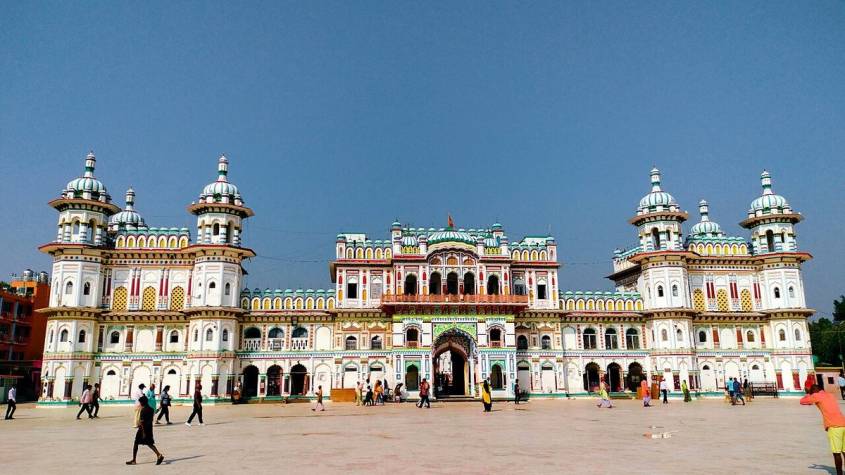
Vivah Panchami 2026 falls on Monday, 14 December. The day commemorates the wedding of Shri Ram and Mata Sita, and it is kept on Margashirsha Shukla Panchami, the fifth lunar day of the bright half of Margashirsha. That month is also called Agahan, and in Nepal it is known as Mangsir.
According to Drik Panchang, for New Delhi the Panchami tithi begins at 4:47 PM on Sunday, 13 December 2026 and ends at 7:15 PM on Monday, 14 December. Because Panchami is already running at sunrise on the 14th, that is the festival date. The clock times move by a few minutes in other cities, but the calendar date across India is the same.
Vivah Panchami 2026 date and tithi
| Particular | Timing (New Delhi) |
|---|---|
| Festival date | Monday, 14 December 2026 |
| Tithi | Margashirsha Shukla Panchami |
| Panchami begins | 4:47 PM, Sunday, 13 December 2026 |
| Panchami ends | 7:15 PM, Monday, 14 December 2026 |
Hindu festival days follow the tithi that is present at sunrise, not only the start and end times of that tithi. If you use a local panchang, check which tithi is running at sunrise in your own city. Drik Panchang's 2026 festival page does not list a narrower puja window inside the tithi, so for a precise local muhurat, use a panchang computed for your town or ask the priest at your temple.
What is Vivah Panchami?
The name is straightforward: vivah means wedding, and panchami is the fifth tithi. In the Ramayana tradition, King Janaka of Mithila held a swayamvara for his daughter Sita. The condition was that a suitor had to string the bow of Lord Shiva. The princes who tried could not do it. Ram, son of King Dasharatha of Ayodhya, lifted the bow and broke it as he strung it, and the wedding followed in Janakpuri, which is identified today with Janakpur in Nepal.
Drik Panchang notes that this episode is told in the Valmiki Ramayana, the Ramcharitmanas, and other Hindu texts, and that the wedding is held to have taken place on Margashirsha Shukla Panchami. The day is observed with particular devotion in the Mithila region, in Ayodhya, and at Janakpur, and in Ram and Sita temples elsewhere.
How is the day observed at home?
The same panchang describes a simple household observance. Devotees rise early, bathe, and take a sankalpa, then offer puja to Ram and Sita. The offerings typically include incense, a lamp, flowers, fruit, and naivedya, and, where it is the family custom, a panchamrita abhishekam. Many families recite or listen to the swayamvara and wedding passages. In the evening, some temples and homes hold a symbolic wedding, with tableaux, bhajans, and mangala songs.
Some devotees also keep a fast. Traditional belief, recorded on Drik Panchang, holds that worship on this day is favourable for a harmonious married life. That is a matter of faith, and families follow the practice they have received. It is not a medical or legal claim.
How Janakpur and Ayodhya celebrate
The largest public celebration is in Janakpur, in the Dhanusha district of Madhesh Pradesh, Nepal. The Nepal Tourism Board describes Vivah Panchami as a week-long festival, with a re-enactment of the wedding, colourful processions, and dance. Local people attend, as do visitors from nearby Indian cities and from Ayodhya. The focus is Janaki Mandir, which the Board calls a rare blend of Mughal and Rajput architecture, and the Vivah Mandap, the wedding courtyard in its garden, which tradition identifies with the site of the marriage.
In Ayodhya, temples associated with Ram and Sita mark the day with devotion. The Janki Mahal Trust, for example, lists Shri Ram Janki Vivah Mahotsav on Margashirsha Shukla Panchami in its annual calendar. A detailed public programme for Ayodhya in 2026 had not been published when this article was prepared. If you plan to travel, confirm temple timings closer to 14 December.
Mid-December nights on the Gangetic plain are cold, and rooms near the main temples fill early in a pilgrimage week. If you are already looking at other December dates, Kurukshetra's International Gita Mahotsav 2026 runs from 5 to 25 December, with Gita Jayanti on 20 December, six days after Vivah Panchami 2026.
If you plan to travel
If you are going to Ayodhya or to Janakpur for Vivah Panchami 2026, plan a little ahead. The Nepal Tourism Board presents the Janakpur festival as a week of events, not a single morning, so two or three nights are more comfortable than a rushed day visit. Confirm the 2026 schedule with organisers or the temple closer to the date, because annual programmes are announced locally and can shift.
From India, Janakpur is a familiar pilgrimage for many families in Bihar and eastern Uttar Pradesh. Entry rules, identity documents, and opening hours are set by the authorities, not by the festival itself, so check the current requirements before you travel and do not rely on last year's advice. In both cities, dress for a winter morning, carry water, and keep some flexibility: processions make the streets around the main temples slow and crowded on the festival day.
If you cannot travel, the home puja described above is the usual way households mark Vivah Panchami 2026.
Where this sits on the winter calendar
Vivah Panchami comes in the same broad winter season as several observances already on our pages, but it is a different festival. Tulsi Vivah celebrates the ceremonial wedding of Tulsi and Vishnu, and it falls earlier, in the month of Kartik. Kartik Purnima 2026 has also already passed. For a wider view of what else is coming, see our India festival calendar for 2026-27 and the winter travel guide.
People sometimes ask whether Vivah Panchami is a good date for a human wedding. In tradition the day is regarded as auspicious, and the Nepal Tourism Board notes that it is thought to be favourable for marriage and starting a family. A personal vivaha muhurat, though, depends on the couple's charts and on a full panchang check. The festival date by itself is not a wedding booking.
Frequently asked questions
When is Vivah Panchami 2026?
Monday, 14 December 2026, which is Margashirsha Shukla Panchami.
When does the Panchami tithi begin and end?
For New Delhi, from 4:47 PM on 13 December to 7:15 PM on 14 December, according to Drik Panchang.
Where is Vivah Panchami celebrated most prominently?
In Janakpur in Nepal, across the Mithila region, and in Ayodhya, as well as in Ram and Sita temples elsewhere in India.
Is Vivah Panchami the same as Tulsi Vivah?
No. Tulsi Vivah marks the ceremonial wedding of Tulsi and Vishnu, usually in Kartik. Vivah Panchami marks the wedding of Ram and Sita, on Margashirsha Shukla Panchami.
Do I need to travel to Janakpur or Ayodhya?
No. Those are the best-known public celebrations, but families across India observe Vivah Panchami 2026 at home and at their local Ram or Sita temple.
Sources: Drik Panchang, 2026 Vivah Panchami date and time for New Delhi; Nepal Tourism Board, Vivah Panchami; Janki Mahal Trust, Ayodhya, festival calendar. Temple programmes and local muhurat can change, so confirm them before you travel or begin puja.
Featured image: Suyash.dwivedi / Wikimedia Commons, CC BY-SA 4.0 (resized). Janaki Mandir, Janakpur, Nepal; illustrative.
Datta Jayanti 2026: Date, Purnima Timings and How It Is Celebrated
Datta Jayanti 2026 falls on Wednesday, 23 December 2026. It marks the birth of Lord Dattat…
Why 71% of Indian Homebuyers Are Now Choosing ₹1 Crore+ Homes in 2026
There’s a number floating around in property circles right now that genuinely stops people …